
 Explore App
The Notes Can Wait. The Patient Can’t.
Clinical Perspective
Dr. Jayati Pandey, BDS, MDS
Endodontist, Berkeley, California, USA
Here is a scene that plays out in dental offices everywhere, every day. A dentist wraps up a consultation with a patient who had sharp, lingering cold sensitivity in the lower left following a diagnosis of irreversible pulpitis in #19. The conversation goes well, the patient understands the treatment plan and agrees for a root canal treatment. Once the patient leaves, the clinician sits down, opens a blank note and tries to rebuild everything that just happened in terms of what the patient said, what the tests showed, what was recommended, what questions came up and what instructions were given. 25 minutes later, the note is done for that one patient. There were eight other patients today.
Every clinician knows the feeling of piling paperwork and most have accepted it as part of the job.
The Real Problem with Notes
We tend to talk about documentation in terms of compliance. Did you chart everything? Are the notes defensible? Will insurance accept them when I submit my claim with the images and radiographs? Those things matter but the bigger issue is that by the time you get to write the notes, the consultation is already fading. A 15 minute conversation with a real person gets flattened into a few lines of clinical shorthand. The way the patient described their pain, the hesitation they had about treatment, the moment they finally understood the diagnosis: none of that actually makes it into the note because you are writing from selective memory.
This is not about being a bad note taker, it is about the basic reality that you cannot give a patient your full attention and write detailed notes at the same time and you should not have to choose between the two!
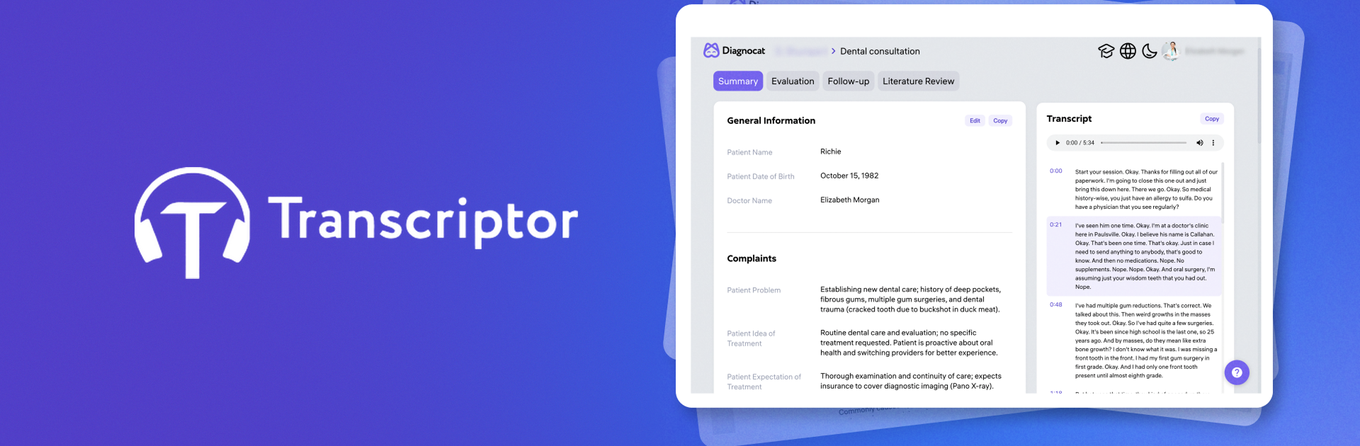
The setup of the transcriptor is simple and if you are already using Diagnocat for imaging then it lives in the same platform, all you will need is two wireless microphones (one for you and one near the patient). While the consultation happens, Transcriptor records the consultation in the background and AI generates a structured SOAP note for clinician review. The clinician is free to make desired edits before signing off, so nothing goes into the record without the clinician approving it.
What I Found
I tested the Transcriptor using simulated consultations based on common endodontic cases. After the recorded consultation ended, I opened the generated note and the first thing I noticed was that it accurately captured the key consultation details in my test case; such as the tooth number, type of restoration, test results, diagnosis, treatment plan and the take-home instructions. It also picked up dental terminology cleanly, which is where most generic transcription tools fall apart.
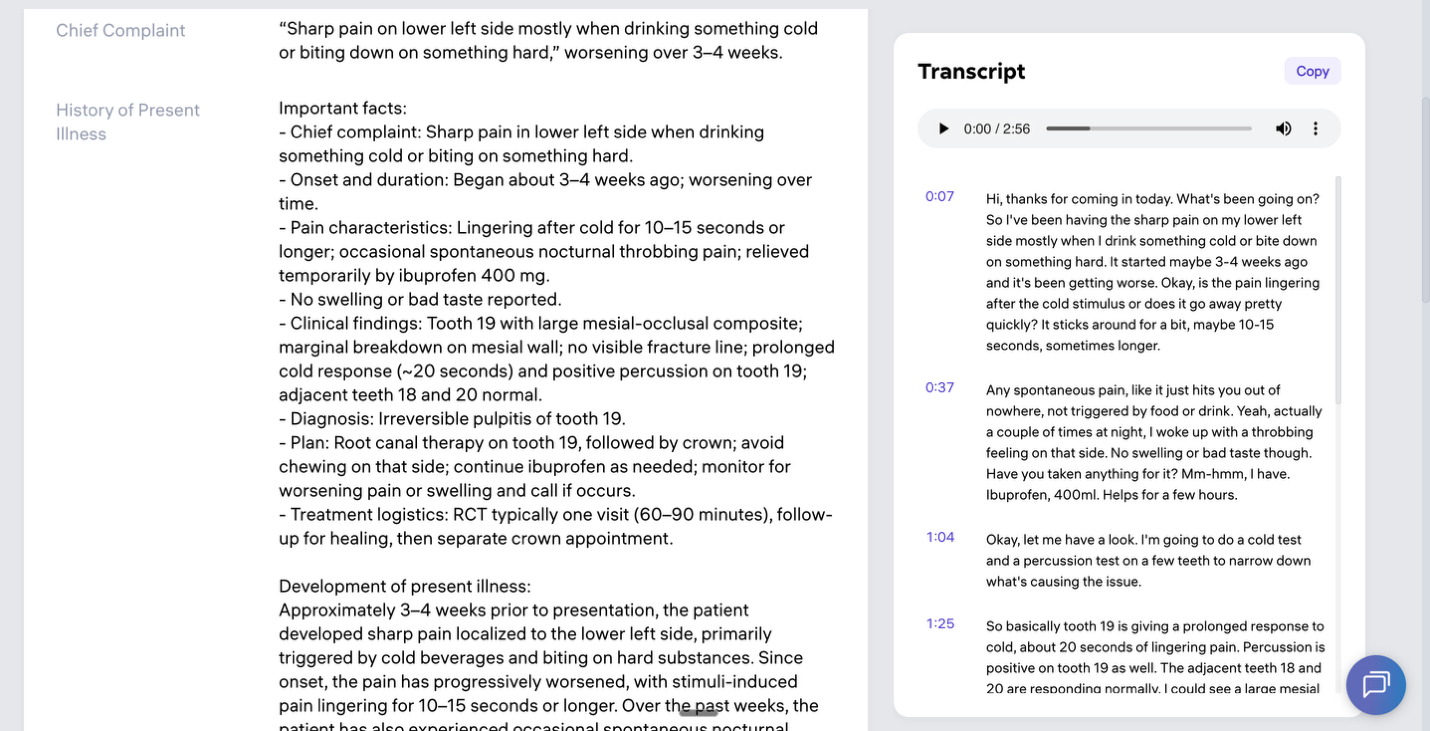
The SOAP note separated what the patient told me from what I found on examination, which sounds obvious but is easy to blur when you are revisiting the conversation at the end of the day. I made a couple of small edits and the note was ready within a few minutes.
For one patient, that is a convenience but across a full day of consultations, it’s a game changer.
The Follow up Letter That Wrote Itself
I wanted to test the follow up letter feature separately, so I recorded a 40 second voice note. Nothing formal. Just me checking in on a patient a month after a root canal, asking how they were feeling, whether the kids had gone off to college yet, and reminding them to come in for a crown. Casual, conversational, the kind of call you would actually make.
Transcriptor took that 40 seconds of audio and generated a full follow up letter. It opened with a personal check in, referenced the root canal from a month ago, explained why a crown is the next step, laid out exactly what to expect at the crown appointment, asked the right follow up questions about healing and closed with clear next steps for scheduling.
What stood out is that the letter did not just transcribe what I said. It understood the intent behind the conversation and structured it into something one could actually use. The tone was warm but professional and the clinical details were accurate.
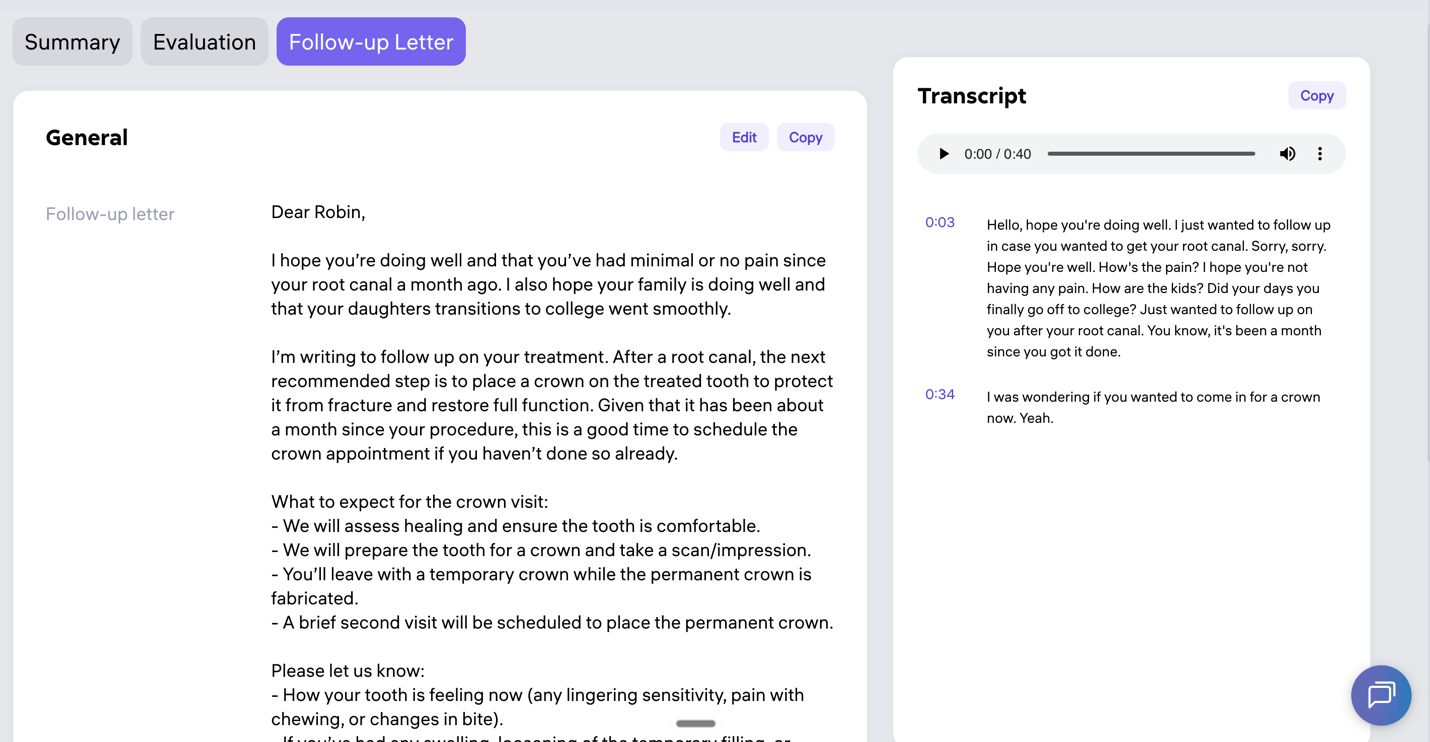
Most clinicians do not send follow up letters because the time cost is too high. Writing one from scratch takes 10 to 15 minutes per patient. When the tool does it for you from a short voice note, that barrier disappears entirely. And the impact on patient communication is real: clear, written follow ups can help patients better understand their treatment recommendations long after the consultation.
Communication Scorecard
After each consultation, Transcriptor scores the interaction against the Calgary-Cambridge model, a well established framework used in medical education to assess how a clinician communicates with patients. It evaluates communication based on how the session was opened, how information was gathered, whether the patient’s concerns were explored, how the diagnosis and plan were explained and how the conversation was wrapped up.
In one of my test runs, it flagged something specific: “I did not use any tension reducing statements and that there was no exploration of concerns before proceeding.” A small thing, easy to miss in real time. But that is exactly the kind of moment where a patient goes from “I understand” to “I am just nodding along.” Seeing that feedback laid out clearly was useful and is the kind of structured input that most clinicians stop receiving the day they finish training.
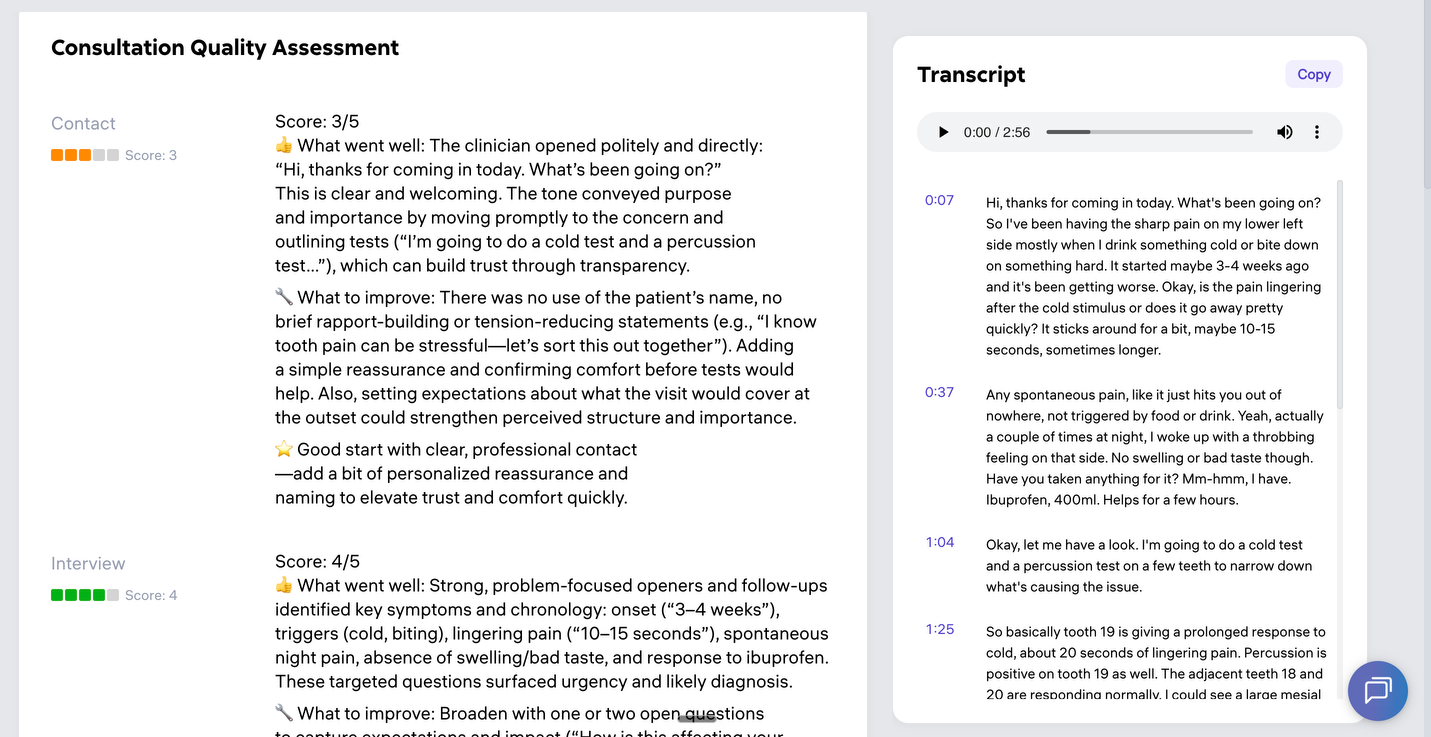
Transcriptor does not ask you to change how you practice. It just takes the part of the job that nobody enjoys and handles it for you. In the tooth #19 scenario, the patient’s understanding of what is happening and why is better supported. Plus, the clinician could close the chart without spending another 25 minutes rebuilding the conversation from scratch.
Note: This article reflects the author’s experience using simulated consultation cases. AI-generated documentation should always be reviewed and approved by the treating clinician before being added to the medical record.
Corresponding Author
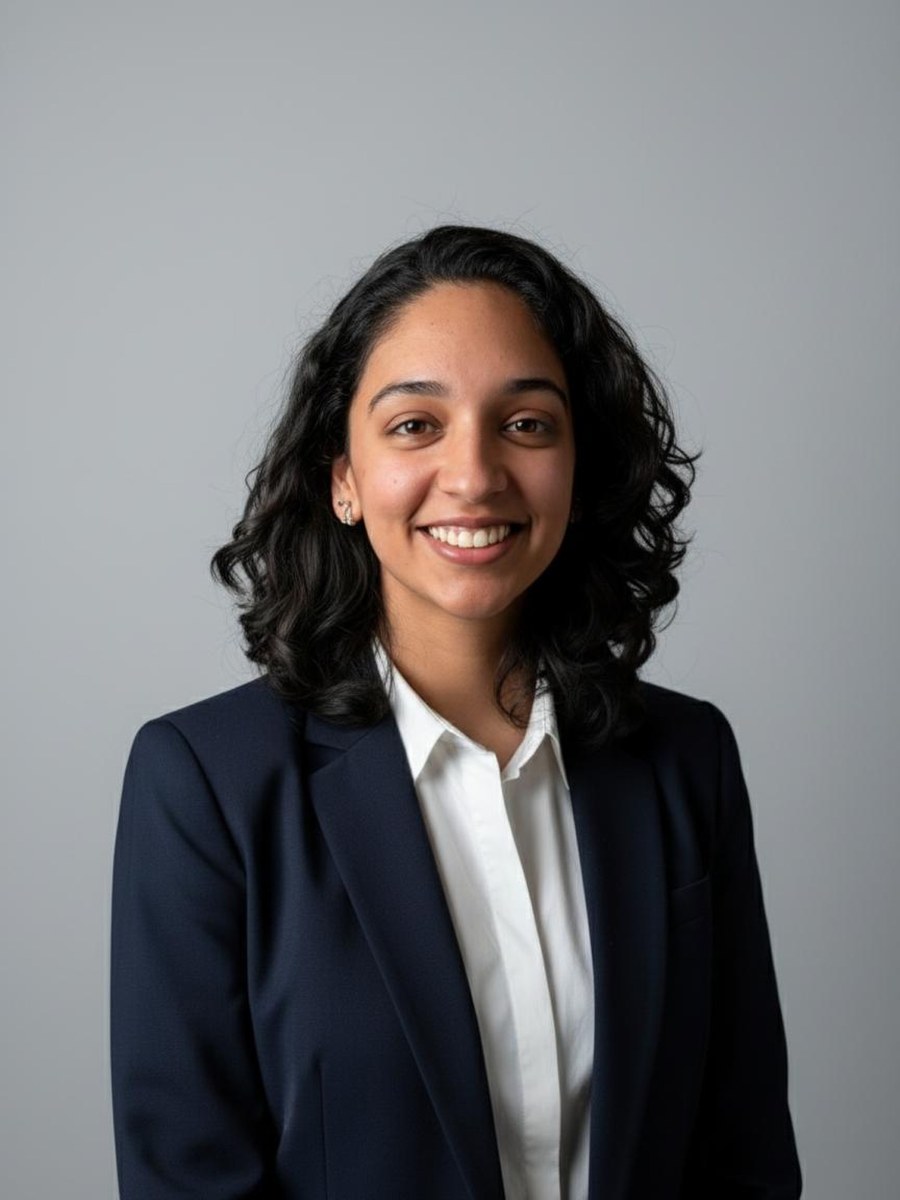
Dr. Jayati Pandey, BDS, MDS
Dr. Jayati Pandey, BDS, MDS, is an endodontist based in Berkeley, California, USA.