 Explore App
How One US Practice Uses AI to Evaluate Cases, Plan Implants & Build Patient Trust
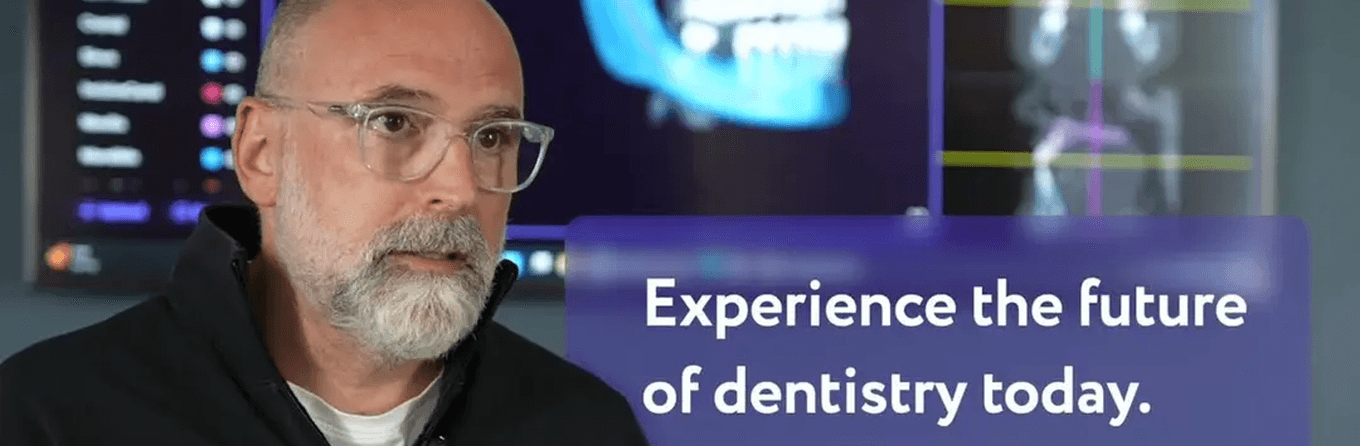
What does AI-powered imaging actually look like inside a real dental practice? Dr. Christian Yaste, a general dentist based in Charlotte, North Carolina, has been using Diagnocat for over three years. In this interview, he shares how AI changed the way he evaluates cases, plans implants, trains his team, and builds trust with patients; in plain, honest terms. Watch the full conversation below.
About Dr. Christian Yaste

Dr. Christian Yaste is a general dentist and co-founder of Ballantyne Dentistry in Charlotte, North Carolina — a practice he built from the ground up in 2001 with a focus on cosmetic, sedation, and implant dentistry. Today, the practice has four doctors and a team of 35. A self-described technology early adopter, Dr. Yaste was among the first in the Charlotte area to implement digital X-rays, and has continued integrating cutting-edge tools across his practice. He began beta testing Diagnocat after meeting the founders at IDS in Germany, and has been a key opinion leader for the platform in the US market ever since.
“Diagnocat is the second opinion. The computer doesn't know who the patient is, there's no bias. And when patients see that the computer found it too, they believe it.”
AI That Works the Way a Dentist Thinks
Dr. Yaste's practice has always been built around technology, but he was careful about where AI would fit in. Three years ago, he was introduced to Diagnocat at IDS in Germany, and what he saw stopped him cold: AI-assisted 3D imaging that could analyze a CBCT, segment it into a full 3D model, and identify findings tooth by tooth, automatically. “I can see certain things,” he explains, “but these two eyes don't find everything. Now instead of being just dependent on me, we're using software that has looked at large datasets of dental images and compares that to my patient's scans.” The result is additional clinical information that can support case evaluation and patient discussions.
From X-Ray to 3D: Changing the Patient Conversation
One of the most immediate changes Dr. Yaste noticed was how patients responded to 3D imaging. “Patients don't understand X-rays,” he says. “It's like they're looking at something in Greek. But when you show them a 3D image of their CBCT, all of a sudden it starts to make sense.” Diagnocat's segmentation module converts a patient's CBCT into a fully manipulable 3D model in minutes, showing teeth, bone, sinuses, airway, and cranial anatomy. For implant cases in particular, this changes the conversation from explaining a plan to showing a plan.
Implant Planning — Start to Guide, One Platform
One of the workflow advantages Dr. Yaste highlights is Diagnocat's implant planning tool which is under clinical study at this clinic. In the past, he used two or three different software platforms to move from CBCT to surgical guide. With Diagnocat, that entire workflow lives in one place. He uploads a CBCT and a digital scan, the software superimposes them, and he can select the implant, set the direction and diameter, choose his guide sleeve, and generate a surgical guide, all without leaving the platform.
Transcriptor: AI That Documents, Grades, and Teaches
Transcriptor is one of Diagnocat's newer modules, and Dr. Yaste is already using it as a training tool for associate doctors. It records patient consultations via microphone, then automatically generates chart notes, a follow-up patient email, a quality score for the consultation, and a curated list of relevant research and literature. “As a younger doctor, you don't have that skill set yet,” he says. “This just fast-tracks that for them.” For established clinicians, it removes the documentation burden and creates a consistent record of every patient conversation.
Why Diagnocat Over Other Platforms?
Dr. Yaste is direct about the competitive landscape: there are other AI dental platforms, and he's aware of them. His reasons for choosing Diagnocat come down to three things: 1) It was the first FDA-cleared AI-powered CBCT second-read solution for periapical radiolucency detection, 2) It offers advanced 3D visualization through the FDA-cleared Segmentron Viewer, and 3) It brings multiple clinical workflows together within a single ecosystem. “I can't think of another AI software that has all the 3D power that Diagnocat has,” he says. “It's just easier to use one software than lots of different ones.”
See What Diagnocat Can Do for Your Practice!
Join thousands of dental professionals using AI to support case evaluation, streamline implant planning, and improve patient communication.
Note: Some features discussed in this interview may not be available in all markets or may be subject to regional regulatory requirements. Please visit diagnocat.com or contact your local representative for availability in your region.